The process for malting barley classification is described in the schematic below, with
key points as follows:
- Varieties submitted for acceptance into program after routine screening for agronomic and processing performance by the applicant.
- Varieties subjected to both pilot and commercial scale malting, and then pilot brewing, using the applicable methodology for either sugar adjunct brewing or starch adjunct brewing.
- Standardised methods based on commercial practices are adhered to in order to replicate conditions the varieties require in the commercial environment.
- The evaluation process takes place over 2 seasons to ensure a broad examination.
- Full accreditation is achieved after a second season’s successful evaluation.
Malting Barley Classification Process
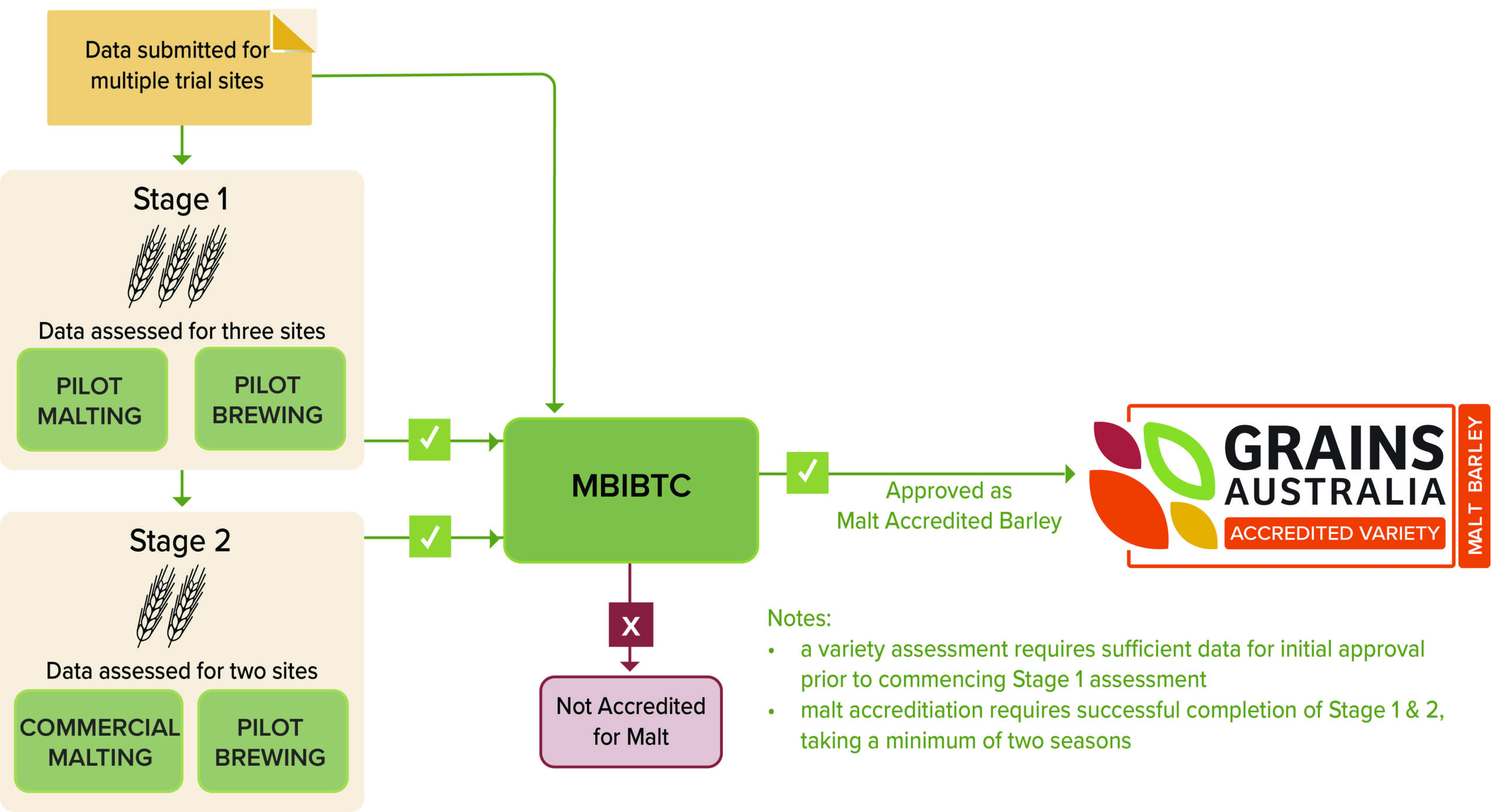
Varieties in the classification program will either be classified as “Malting Barley” if they pass the requirements of the program or be designated by the grain trading standard terminology applicable at the time for non-malting barley if they fail to achieve malting barley classification.
All barley varieties are subject to either the GTA Trading Standards or GIWA Grain Receival Standards upon delivery into a receival site.