The process for milling oat classification is described in the schematic below, with
additional key points as follows:
- Varieties are submitted for assessment into program after routine screening for agronomic and processing performance by the applicant.
- Data collected for multiple trial sites, for a minimum of two seasons to ensure a broad examination of the variety.
- Quality characteristics assessed during variety classification are more comprehensive than those possible at the point of receival.
- A Milling Oat Classification is achieved after successful evaluation.
Milling Oat Classification Process
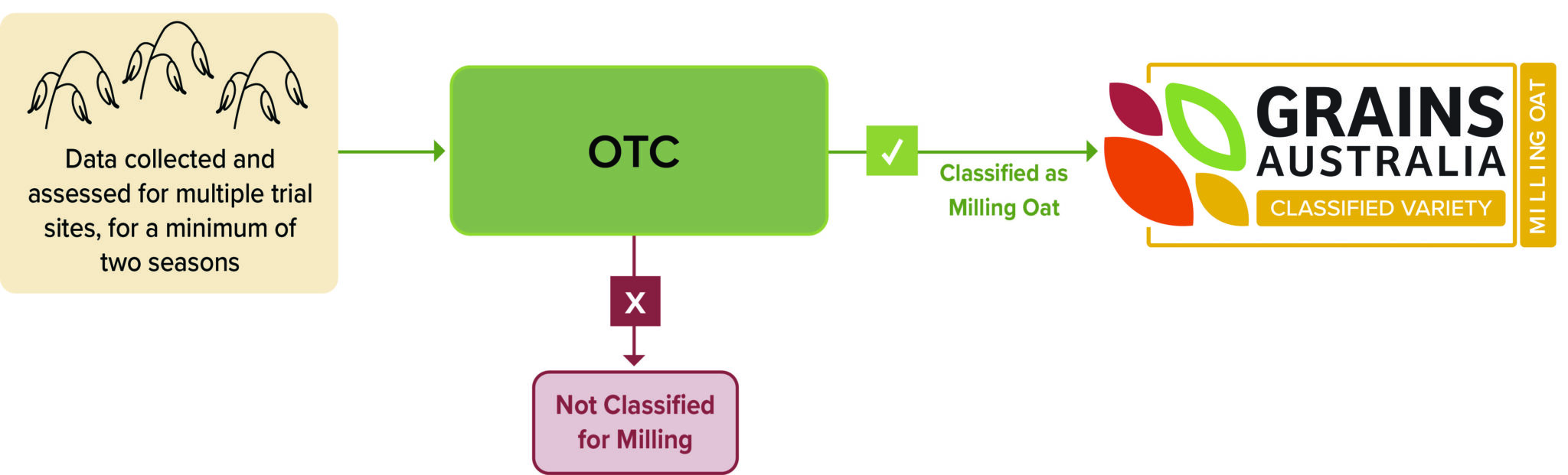
Varieties in the classification program will either be classified as a ‘milling oat’ if they pass the requirements of the program or be designated by the grain trading standard terminology applicable at the time of classification for a non-milling oat if they fail to achieve milling oat classification.
All oat varieties are subject to either the GTA Trading Standards or GIWA Grain Receival Standards upon delivery into a receival site.